The centre of the novel, set in Ireland, is Montefort, a dilapidated country house. The
period is the 1950's. The novel was written in 1952. Elizabeth was a prolific and outstanding Irish author who had associations with the Bloomsbury Group.
Elements of the novel may be autobiographical. Elizabeth_Bowen biography.
Bowen inherited Bowen's Court and Antonia inherits Montefort from her cousin Guy who has been killed in WW1. Montefort is a fading relic of Protestant Irish aristocracy kept going by an illegitimate progeny, Fred Danby.
Bowen is renowned for her ghost stories and in this romantic story of a girl's coming of age, Guy haunts the novel, his photograph in the hall and his letters discovered in the attic add to the reader wondering who he really was. All the women seem to be entranced by him. Alicia, the divorced cousin and his ex fiancee have idealised memories of his charm. There is one exception and that is Danby's second daughter who pervades the house as an evil genius presence. Jane is the heroin the first daughter. There seems a very unfair comparison between the two daughters. One is beautiful and admired, the other is ugly and unliked.
The family is poor and declining in status in the community. Irish history in regard to agriculture and politics is very complex. However, the Irish among us may understand the nuances of this situation. There is also a criticism of Bowen's use of dialogue. I did not find it too difficult to understand once I decided it was Irish brogue.
I thought that Bowen's prose was beautifully poetic. There were times that I would read a sentence over twice or three times just because her choice of words seemed to sink into my mind with a depth of emotion I could only marginally understand in one reading. I really loved this aspect of the novel.
There has also been criticism of the ending of the novel. I found it quite creatively splendid. I have tried to write romantic novellas myself and the way Bowen carefully leads the reader through Jane's eyes towards the ending is remarkable. For those that believe in "love at first sight", as I suspect that Bowen did ( she had many affairs that have been recorded and a happy marriage), then this is a virtuoso. I fell in love with the description of the romantic hero too.
My criticism would be the tone of the interactions between Lilia and 1. Fred and 2. Antonia and her tone towards Lilia. I found it too negative. However, there comes into being a reconciliation of sorts between Lilia and Fred and it is understated but hopeful.
I really enjoyed discovering this novelist. I am reading her short stories at the moment and shall go on to read another novel. I thank Elizabeth Rapp at Dillington House for introducing me to Elizabeth Bowen and I thank all members of the Book Group for all their helpful comments.
As I write, it is Christmas Eve. I shall be looking forward to 2019 Book Groups at Dillington House and meeting up again with the book lovers of the group. Happy Christmas.
Zoe Ainsworth-Grigg
http://www.zoeainsworthgriggbooks.com/339348241 Zoe's biography
Monday, 24 December 2018

Saturday, 22 December 2018
Film Review - The Shape of Water
This film does not really fit into any kind of genre. Is it a fantasy or a romance or is it a comment on American Society.
The Guardian Critic sees it in terms of sexuality -https://www.theguardian.com/film/2018/feb
However, the principal actress plus "the creature" share a bond of the disenfranchised. This is more about communication between people who share a position of abuse in society and how they manage to overcome barriers of communication, and communication difficulties between a sensitive person and something or someone we regard as an "alien creature".
Set in the cold war in the USA the CIA leader of the research laboratory displays all the crass materialism and cruelty that are the worst characteristics of USA culture during the cold war.
The Russian scientist whose primary motivation is the craft of science who helps the creature displays an interest and in so doing signs his death warrant from the KGB. The artist character shows a mature understanding re black people and also animal instinctual behaviour. He is the cultured person ignored by most.
One of the funniest moments for me in the film was when the van with the escaping "creature" strikes the newly acquired "teal" Cadillac, the symbol of wealth in America's 1950's and the CIA official's ensuing wrath.
We see the difference between him when he has abusive sex with his wife and the lyrical fantasy sexual scene in the bathroom between Elisa and the creature.
This film is a subtle criticism of American culture, brutality and cruelty toward those things we cannot understand or relate to and or perhaps fear. It is perhaps a lesson for us all still in modern society.
It is a great film with fine performances, please try to see past the sex and understand the underlying message of the director and my 'reading' of the film from a film studies perspective.
While Freud may be the father of modern psychology he has done a great disservice to society by increasing the interest of the sex drive as a motivating force by advertising agents and or ( film critics.)
.
Zoe Ainsworth-Grigg
http://www.zoeainsworthgriggbooks.com/339348241 Zoe's biography
The Guardian Critic sees it in terms of sexuality -https://www.theguardian.com/film/2018/feb
However, the principal actress plus "the creature" share a bond of the disenfranchised. This is more about communication between people who share a position of abuse in society and how they manage to overcome barriers of communication, and communication difficulties between a sensitive person and something or someone we regard as an "alien creature".
Set in the cold war in the USA the CIA leader of the research laboratory displays all the crass materialism and cruelty that are the worst characteristics of USA culture during the cold war.
The Russian scientist whose primary motivation is the craft of science who helps the creature displays an interest and in so doing signs his death warrant from the KGB. The artist character shows a mature understanding re black people and also animal instinctual behaviour. He is the cultured person ignored by most.
One of the funniest moments for me in the film was when the van with the escaping "creature" strikes the newly acquired "teal" Cadillac, the symbol of wealth in America's 1950's and the CIA official's ensuing wrath.
We see the difference between him when he has abusive sex with his wife and the lyrical fantasy sexual scene in the bathroom between Elisa and the creature.
This film is a subtle criticism of American culture, brutality and cruelty toward those things we cannot understand or relate to and or perhaps fear. It is perhaps a lesson for us all still in modern society.
It is a great film with fine performances, please try to see past the sex and understand the underlying message of the director and my 'reading' of the film from a film studies perspective.
While Freud may be the father of modern psychology he has done a great disservice to society by increasing the interest of the sex drive as a motivating force by advertising agents and or ( film critics.)
.
Zoe Ainsworth-Grigg
http://www.zoeainsworthgriggbooks.com/339348241 Zoe's biography
Thursday, 13 December 2018
Film review of Disobedience - A film by Sebastian Lelio
The film is an adaptation of a novel by Naomi Alderman. It is a "powerful exploration of faith, sexuality and freedom told through the passionate love story between two women in London's Orthodox Jewish community,"
For me the cinematography of this film was very powerful indeed. As were the outstanding performances of the three leading actors. The Director produced a very lyrical beautiful rendition of a spiritual dilemma for all members of the community. Focusing on the faces of the actors of all of the cast we are invited to interpret their emotions. There is a vast range of emotional struggles. There are also some very visual stunning shots.
There is a sex scene but is not gratuitous. I found it shocking but as a 72 year old heterosexual woman, that is not surprising. When I got over my shock I had a greater understanding.
We are shown the Jewish community and their culture,( but for me, I think, it could have been any close community, any mores of any faith structure) and its response to those that transgress the conservative norm. On the other hand we are also shown the power of faith. All the characters are sensitively portrayed as having generosity and faith and a genuine desire to be dutiful and follow their faith.
Who among us have not had a dilemma in life? And how do we respond? It hurts and often we lash out.
This is the best watch, the best film, the best director, I have seen in a very long time, I shall look out for his next film.
Zoe Ainsworth-Grigg
For me the cinematography of this film was very powerful indeed. As were the outstanding performances of the three leading actors. The Director produced a very lyrical beautiful rendition of a spiritual dilemma for all members of the community. Focusing on the faces of the actors of all of the cast we are invited to interpret their emotions. There is a vast range of emotional struggles. There are also some very visual stunning shots.
There is a sex scene but is not gratuitous. I found it shocking but as a 72 year old heterosexual woman, that is not surprising. When I got over my shock I had a greater understanding.
We are shown the Jewish community and their culture,( but for me, I think, it could have been any close community, any mores of any faith structure) and its response to those that transgress the conservative norm. On the other hand we are also shown the power of faith. All the characters are sensitively portrayed as having generosity and faith and a genuine desire to be dutiful and follow their faith.
Who among us have not had a dilemma in life? And how do we respond? It hurts and often we lash out.
This is the best watch, the best film, the best director, I have seen in a very long time, I shall look out for his next film.
Zoe Ainsworth-Grigg
Saturday, 10 November 2018
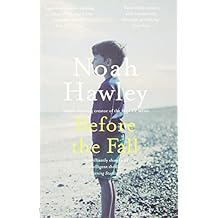
Before the Fall - Noah Hawley
'Before the Fall' by Noah Hawley
Review
I was enthralled and on tender hooks throughout this novel. I enjoyed the philosophical discussions. I enjoyed the psychological profiles of the stereotypical characters. I enjoyed the drama unfolding right to the last page and the ending leaving the reader to wonder about the Universe.
My only criticism is that it had a sexist dimension. All the female characters were home makers, flaky heiresses or air stewardesses. No female scientists, of which there are many, or female company execs who balance the male dominated world.
So that is the end of my feminist rant, on the whole this is an exciting book, well written and thought provoking. Great Read!
Zoe Ainsworth Grigg
Thursday, 8 November 2018
Wuthering Heights and the incest factor? A Quaker Feminist reflection
Quote:
"Abuse in Chaotic families
Sibling sexual abuse victims often live in dysfunctional family environments that subtly foster incestual behaviours.... Sibling incest appears more likely to occur in large families characterised by physical and emotional violence, marital discord, explicit and explicit sexual tensions, and blurred familial boundaries.Emotionally and /or physically absent parents may empower older siblings to assume parental roles, in short, these families are chaotic and unlikely to recognize the significance of behaviors occurring between siblings." (Asherman & Safier, 1990, Caffaro & ConnCaffaro, 2005)"
When we look at the psychology of both Heathcliff and Cathy, we can see the underlying damage that was done during childhood.
Heathcliff was brought into an already chaotic household, with few boundaries. We are told he had an "evil" dark countenance and other critics have remarked on a racist element in the novel. This made him an outsider and a target and he began using his wits and his strength of character to survive in a place where he was without any form of escape and one where dependent for sustenance and shelter. He was subjected to physical and emotional violence from a number of sources but chiefly the brother of the household.
The boundaries were even more difficult with Nelly Dean being one of the children.
Cathy on the other hand, had been able to have some maternal caring before her mother died and she had the continuity of feeling that her father owned the place where she lived and there was a degree of entitlement and continuity in her status in the community.
See Winnicott. (maternal gaze and good enough mother )
From the beginning of Nelly Dean's commentary, we are introduced to a group of children that were bringing themselves into adulthood. If we take a Freudian analysis, the super ego was given little chance to develop. The checks and balances provided by a sound personal conscience were not given any guidance by adults apart from Jacob using biblical texts which were often rejected.
Cathy was the only person in Heathcliff's childhood that gave him, love, kindness,understanding and also she represented a romantic kindred spirit. She became for him, not only mother, sister,friend, potential sexual partner but also a lifeline and something for him to psychologically hold onto when he was the most vulnerable member of that chaotic household and his personality was being brutalised.
Their relationship is psychologically precarious for both of them. It was deeply harmful and eventually disastrous.
They ran wild and carefree over the moors until Cathy met Linton. Was she totally mercenary/opportunistic and attracted to a lifestyle or was there actual genuine feeling between them? I think it is the latter. It is possible to love two people and she was a girl maturing, and open to the new and possible other choices and partners.
Then came the fateful rejection when Cathy says of Heathcliff- " I am him"- referring to Heathcliff. What are we to make of this? their psychological characters were intermingled through what many people who may have thought as "child play" and actually was incest. We can only ponder to what passed as child play on the moors. Heathcliff overhears her plan to marry and the rejection must have been absolutely traumatic for his mental health. In fact he disappears for three years, we know not where.
We are told Cathy is happy and content in her marriage. And it is seen through Linton's behaviour that he certainly loved his wife.
When Heathcliff returns he is a changed man and he challenges Linton in front of Cathy. She becomes angry and sides with Heathcliff, and rejects her husband but it is also a condemnation of Hewathcliff she wants Linton to behave as an Alpha man and attack him physically, something she was accustomed to in her own household as a child. Heathcliff, for her, is perhaps some idealised alpha man, strong, courageous and capable of protection, which she may have liked in her childhood but then saw another type of love. Her emotions, then come into conflict and she becomes emotionally very confused and she is unable to cope. She has a nervous breakdown, going to her room and spending days in anguish , never to be the same again and some time afterwards she dies in childbirth.
On the other hand, after Cathy's death, Heathcliff becomes obsessed with a rage of revenge. In the second part of the novel we read the extent of his cruelty to everyone around him. He is an isolated tormented man. The cruelty is shocking and it is difficult to imagine a woman in the nineteenth century could have imagined this kind of disturbing behaviour. It is almost too difficult to read. It may be that when Heathcliff returned he took demonic delight in Cathy's arousal of negative passion. The cruelty to people she loved, her sister in law, her sister in law's child, her daughter,her brother's child may have been a kind of punishment to her through spiritual realms.
He dies at the hands of Cathy's apparition. Ending his torture and his torture to others. This happens only after he stops his cruelty seemingly having just run out of his anger and obsession.
At the end of the novel we see that Emily Bronte provides us with a resolution and a healing when second generation cousins are brought together through acts of kindness and genuine love, and their future is secure.
I am focusing on one element of the novel which I find interesting, but of course, the novel has been fascinating to readers for more than a century. As a woman and a feminist, I cannot accept that Emily Bronte wrote about such depths of abuse; physical, emotional, psychological, spiritual, and sometimes all of them combined, without either a) having knowledge of such things occurring on the moors and related through a third party or b) she herself had personal experience of some kind of disastrous abuse.
As women we know that we are often the victims of abuse, which is not always recognised. I would say in conclusion that this novel is full of pain for both genders.
Zoe Ainsworth-Grigg
www.zoeainsworthgriggbooks.com
Zoe Ainsworth Grigg holds a Diploma in Psychoanalytic Psychology, Birkbeck College, ( London University) Certificate in Person Centred Art Therapy and also studied feminist literature as part of a BA degree in Humanities.
"Abuse in Chaotic families
Sibling sexual abuse victims often live in dysfunctional family environments that subtly foster incestual behaviours.... Sibling incest appears more likely to occur in large families characterised by physical and emotional violence, marital discord, explicit and explicit sexual tensions, and blurred familial boundaries.Emotionally and /or physically absent parents may empower older siblings to assume parental roles, in short, these families are chaotic and unlikely to recognize the significance of behaviors occurring between siblings." (Asherman & Safier, 1990, Caffaro & ConnCaffaro, 2005)"
When we look at the psychology of both Heathcliff and Cathy, we can see the underlying damage that was done during childhood.
Heathcliff was brought into an already chaotic household, with few boundaries. We are told he had an "evil" dark countenance and other critics have remarked on a racist element in the novel. This made him an outsider and a target and he began using his wits and his strength of character to survive in a place where he was without any form of escape and one where dependent for sustenance and shelter. He was subjected to physical and emotional violence from a number of sources but chiefly the brother of the household.
The boundaries were even more difficult with Nelly Dean being one of the children.
Cathy on the other hand, had been able to have some maternal caring before her mother died and she had the continuity of feeling that her father owned the place where she lived and there was a degree of entitlement and continuity in her status in the community.
See Winnicott. (maternal gaze and good enough mother )
From the beginning of Nelly Dean's commentary, we are introduced to a group of children that were bringing themselves into adulthood. If we take a Freudian analysis, the super ego was given little chance to develop. The checks and balances provided by a sound personal conscience were not given any guidance by adults apart from Jacob using biblical texts which were often rejected.
Cathy was the only person in Heathcliff's childhood that gave him, love, kindness,understanding and also she represented a romantic kindred spirit. She became for him, not only mother, sister,friend, potential sexual partner but also a lifeline and something for him to psychologically hold onto when he was the most vulnerable member of that chaotic household and his personality was being brutalised.
Their relationship is psychologically precarious for both of them. It was deeply harmful and eventually disastrous.
They ran wild and carefree over the moors until Cathy met Linton. Was she totally mercenary/opportunistic and attracted to a lifestyle or was there actual genuine feeling between them? I think it is the latter. It is possible to love two people and she was a girl maturing, and open to the new and possible other choices and partners.
Then came the fateful rejection when Cathy says of Heathcliff- " I am him"- referring to Heathcliff. What are we to make of this? their psychological characters were intermingled through what many people who may have thought as "child play" and actually was incest. We can only ponder to what passed as child play on the moors. Heathcliff overhears her plan to marry and the rejection must have been absolutely traumatic for his mental health. In fact he disappears for three years, we know not where.
We are told Cathy is happy and content in her marriage. And it is seen through Linton's behaviour that he certainly loved his wife.
When Heathcliff returns he is a changed man and he challenges Linton in front of Cathy. She becomes angry and sides with Heathcliff, and rejects her husband but it is also a condemnation of Hewathcliff she wants Linton to behave as an Alpha man and attack him physically, something she was accustomed to in her own household as a child. Heathcliff, for her, is perhaps some idealised alpha man, strong, courageous and capable of protection, which she may have liked in her childhood but then saw another type of love. Her emotions, then come into conflict and she becomes emotionally very confused and she is unable to cope. She has a nervous breakdown, going to her room and spending days in anguish , never to be the same again and some time afterwards she dies in childbirth.
On the other hand, after Cathy's death, Heathcliff becomes obsessed with a rage of revenge. In the second part of the novel we read the extent of his cruelty to everyone around him. He is an isolated tormented man. The cruelty is shocking and it is difficult to imagine a woman in the nineteenth century could have imagined this kind of disturbing behaviour. It is almost too difficult to read. It may be that when Heathcliff returned he took demonic delight in Cathy's arousal of negative passion. The cruelty to people she loved, her sister in law, her sister in law's child, her daughter,her brother's child may have been a kind of punishment to her through spiritual realms.
He dies at the hands of Cathy's apparition. Ending his torture and his torture to others. This happens only after he stops his cruelty seemingly having just run out of his anger and obsession.
At the end of the novel we see that Emily Bronte provides us with a resolution and a healing when second generation cousins are brought together through acts of kindness and genuine love, and their future is secure.
I am focusing on one element of the novel which I find interesting, but of course, the novel has been fascinating to readers for more than a century. As a woman and a feminist, I cannot accept that Emily Bronte wrote about such depths of abuse; physical, emotional, psychological, spiritual, and sometimes all of them combined, without either a) having knowledge of such things occurring on the moors and related through a third party or b) she herself had personal experience of some kind of disastrous abuse.
As women we know that we are often the victims of abuse, which is not always recognised. I would say in conclusion that this novel is full of pain for both genders.
Zoe Ainsworth-Grigg
www.zoeainsworthgriggbooks.com
Zoe Ainsworth Grigg holds a Diploma in Psychoanalytic Psychology, Birkbeck College, ( London University) Certificate in Person Centred Art Therapy and also studied feminist literature as part of a BA degree in Humanities.
Wednesday, 12 September 2018
Howards End - refelections by a Quaker Feminist
The January 1910 United Kingdom general election was held from 15 January to 10 February 1910. The government called the election in the midst of a constitutional crisis caused by the rejection of the People's Budget by the House of Lords, in order to get a mandate to pass the budget.
The election produced a hung parliament, with the Conservative Party led by Arthur Balfour and their Liberal Unionist allies receiving the largest number of votes, but the Liberals led by H. H. Asquith winning the largest number of seats, returning two more MPs than the Conservatives. Asquith formed a government with the support of the Irish Parliamentary Party, led by John Redmond. Another election was soon held in December.
The Labour Party, led by Arthur Henderson, continued to gain strength, going from 29 seats to 40.
Labour Party formed 1900
Worker's Education Association formed 1903
Women's Suffrage 1918
Howard's End published in 1910
Howards End is a very complex and erudite novel which still has implications for readers of the present day. E.M.Forster was a Cambridge Classics Scholar and Gay. He is acknowledged to have an empathic understanding of women in his generation.
I can best record my comments by going through the characters.
First the Shlegels , Margaret who becomes a substitute mother to her two younger siblings at 8 years old. She has a mature practicality, is attractive but not too attractive to attract unwelcome male admirers and she is fair minded. Helen, impetuous, principled, highly strung and Tibby who is possibly on the autistic scale, who is other worldly and receded to Oxford cloisters shunning social company and studying Chinese.
Henry Wilcox- clever, a born organiser of military precision and successful business man who builds an empire throughout the course of the book. He is generous to his family and friends and is a good host.
Mrs Ruth Wilcox - first wife of Henry who has inherited Howards End from her family and as the novel progresses has an almost mystical love of the house and its vicinity and ecological surroundings, shared by the rather puzzling relationship of her retainer who decides to furnish the house without permission. It can be seen in Forster's biography that he had a love for a house in a similar way which he shared with his single mother after his father died until the lease ran out and they were forced to move.
Question?
Does this rather mystical regard for the countryside so beautifully described by Forster, and is such a pleasure to the reader hark back to the pantheism of Romantic Poetry? The retainer, the strange Miss Avery,is both mystical and magical with the pagan wisdom of people connected to the land?
Ruth Wilcox is said to come from Quaker stock, She has Grace and deftly disarms conflict at Howards End when Helen and her second son become romantically involved briefly. This is typically Quaker. The Chinese were first mediators and Quakers were the second. We can see her listening in London when she is invited to lunch by Margaret to meet her London cultured set and that she does not contribute to debate but sees both sides. It is the role of the mediator to hold opposing views in the mind without judgement. We are told she lives by ' doing no harm' ., Many Quakersin the past and today live by this mantra.
But Quakers were also great industrialists and Bankers in this period, ( Cadbury, Fry, Fox, Lloyds. (NB Quaker business practice is still practiced to this day eg a moderate profit and a fixed price, no haggling) Cadbury's were notable for building the Bourneville Estate and treating their employees with dignity, respect and a living wage. They also provide for recreation for their employees.
Quaker women have always been encouraged to be radical from the earliest times. Elizabeth Fry for instance reformed the prison system, but there were other Quaker women , radical, forceful and fighting for social change. Quakers did own slaves but other Quakers strove to help the abolition of slavery and opened their Meeting Houses to all types of radical thinkers including the women in the suffrage debate. Modern Quaker's have committed to off setting Climate change and engage in influencing public opinion towards ecological preservation continuing to try to think radically of the problems today.
Ruth is the custodian of a spiritual essence of Howards End and passes it to a worthy a spiritual owner on her death. Henry does not acquiesce to his deceased wife's wishes but fate takes a hand, Henry's personality receives a blow caused by his self inflicted shame of his eldest son's imprisonment, Margaret's compassion to forgive both her sister's immaturity and her Husband's obstinacy makes her the rightful mistress of Howards End.
The Wilcox children- they are the worst examples of the Nouveau Riches. They applaud the despicable motorcar, they are rude to servants. Evie sends a wedding present back because Miss Avery , is a farm worker whom she considers to be socially below her. They love money and love spending it and never have enough although they are given ample allowances.
The Houses- Each house seems to have a character of its own, the Schlegel's house is to be pulled down ' Houses have a way or dying..' p249 Ch 31, the house in Shropshire, Leonard's house, Henry's town house, the new house he intends to build are all given personalities in the context of the invading sprawl of commerce. But of course, the solid, characterful house of Howards End is the centre of the novel. It holds an intrinsic beauty which his first wife and then his second wife appreciated, p214 ch24 ',,, from the window was an English tree. no report had prepared her for its peculiar glory.....their message was not of eternity , but of hope on this side of the grave. As she stood as the one, gazing at the other, truer relationships had gleamed.' Henry would never understand, he does not have the language to understand and to be honest Margaret doesn't understand commercial language. Henry is trade but the women are heiresses, This highlights the class war of the novel together with the conflict between culture and commerce. But Margaret is the winner.
Leonard Bass - is married to Jacky ( who is a prostitute ) out of convenience and possibly guilt. Leonard has a sensitivity towards the arts. He is trying to self educate himself. He is a protege of Margaret and Helen. Both think him attractive. Margaret sees him as a real man, and Helen has a baby by him.
Page ch 27 ' there's a nightmare of a theory that says a special race is being born ... the "I" had you heard of that?" This is a different 'I', it is possibly Nietzsche. 'I' previously in the novel the 'I' and the 'me' is discussed in relation to Leonard. Like Leonard I have not studied the German philosopher Nietzsche but Helen is German. " Me " in Mead;s philosophy stands for the cultured side of the personality. Both the "I" and the "me" should be in balance according to Mead. However in balance Nietzsche philosophy is more likely.https://en.wikipedia.org/wiki/Friedrich_Nietzsche
Margaret and Helen have this philosophy of their own. When Leonard describes his walk through the night , Margaret discuss the 'I' and the 'me' in relation to Leonard's personality.
Nietzsche philosophy was as far as I can understand is a plea for authenticity, During this period his philosophy was canbalised by his sister Elisabeth Forster-Nietzche https://en.wikipedia.org/wiki/Elisabeth_F%C3%B6rster-Nietzsche
Is this a coincidence that Forster name is connected with -Nietzche?
Later scholars revived the original philosophy in the 1960's
Helen's animosity towards the Wilcox's is perhaps rather out of proportion, at least by modern standards in that it is said there is just one kiss ( or possibly more) and then she is shunned and becomes a woman scorned by a man, who is her social inferior and in her view of the family's authenticity humiliates her total philosophy of life. Is Henry Wilcox one of the nightmare race in her opinion.She then rages against the male gender except for Leonard who she champions and tries social engineering by asking Tibby to give him money. It is only after she has a (lesbian?) relationship with an Anglicized Italian women in Germany that her anger assuages.
Leonard - is on the edge of poverty, barely scratching a living as a wage slave. Jacky is another nail in his coffin for the reader, she is one of the poor, ignorantly steeped in her 'bestiality,' which the middle-classes do not care to think about. and her fate is never described.
But middle class women before the advent of Marie Stopes (1921) willingly turned a blind eye to the Jackies of the world to relieve the burden of childbirth.
Henry's indiscretion may not of worried Ruth, and Margaret, forgave again.
Leonard is a condemned man. He has ideas above his station, he should return to the plough, know his place. Poor Leonard reared in a family who disown him as an embarrassment and with a crushing conscience seeks out Helen and to his eyes his responsibility in remorse, and meets his death.
The Commentator of the novel. - This is another character in my opinion. Is it the voice of the author? or is it the voice of the establishment, in these turbulent times? Or is it a proponant of someone interested in a model for society based on Nietzsche philosophy?
Leonard's Chapter no.41 we are told that remorse is not among the eternal verities,https://www.psychologytoday.com/us/blog/the-consciousness-question/201412/the-eternal-verities
But the commentator does not think that Leonard with his remorse and changed by it is a 'good man', if he were a better man.... etc, the commentator has a poor opinion of Leonard.
Then ' In Hilton p340 '... he stepped out into the country. Here men had been up since dawn. Their hours were ruled not by a London office but by the movements of the crops and the sun..... they are England's hope..... they can still throw back to a nobler stock, and breed yeomen.'
I note the word they , what nationality is Forster?
The Schleger Women
Which modern feminist wouldn't like to be like Margaret and Helen. They are both already liberated.
They are cosmopolitan
They are independently and financially secure.
They are both free thinkers
They are cultured and educated.
There is no patriarchal figure in their family nor friends.
They respect and connect with the people they meet.
They believe in helping the poor, in a rather ineffective way "raising them up"
Margaret has the choices and the abilities to challenge and leave her husband Henry Wilcox when he displays double sexual standards and a lack of compassion towards herself and her sister because she has financial security to do so.
And yet she possesses spiritual depth, liberality, and understanding of men to be able to love romantically but also to love spiritually, to have the gift of deep compassion for human psychology and individual failings. ( Is this the sensibility of a homosexual man? )Is she German aristocrat?
She keeps her integrity by refusing Henry's money but accepting Mrs Ruth Wilcox's house.
Helen can have a baby and live on an independent income, without need for childcare, employment which hinders motherhood, or the give and take of marriage (to a man or a woman). She does not have to work, then make a meal, do the housework, put the children to bed and then get ready for work the next day. Nor be a single mother on benefits.
The novel's language is benign, psychologically aware, full of wonderful prose, philosophically and spiritually deeply moving and a message from the past to the future. It speaks to the eduvcated middle classes. I keep in mind that Forster invented these characters which is masterful. But it is my opinion it disguises a view and philosophy which will end in war.
I include a man's opinion.https://www.theguardian.com/commentisfree/2014/aug/18/howards-end-em-forster-classic
________________________________________________________
Howards End inspired this poem
Wrong
Wrong how that word
reverberates, what was
wrong,who was wrong.
The world revolves on
perceptions of right and
wrong but be strong.
Remember that there
might be different views.
What is wrong with you!
you hear them say
when people disagree
but free their imagination
and another aspect
will they see,
When different world views collide,
keep inside
a respectful attitude.
different life experiences preclude
instant understandings.
Zoe Ainsworth Grigg holds a Diploma in Psychoanalytic Psychology, Certificate in Person Centred Art Therapy and also studied feminist literature as part of a BA degree in Humanities. www.zoeainsworthgriggbooks.com
Monday, 10 September 2018
Madame Bovary
The first thing to say is that - Flaubert is not intentionally a
feminist writer, however, he has created a female character in which we
can learn of feminist issues.
Emma ( Madame Bovary) marries a rural doctor, Charles, and they live in a provincial part of the France. From the beginning of the marriage we can see an almost existential conflict between art and science but neither of them has had access to very good education and perhaps they both have average intelligence. Charles is a "run of the mill", unimaginative Doctor but carries out routine problems successfully and comes unstuck when he tries to experiment on a patient. Emma has an artistic temperament, playing the piano and at first inventing ways to please Charles hoping in return he will give words of love and understanding, praise and companionship. But Charles has no imagination and doesn't understand the theatre when they go and although he loves her unconditionally, it is a love of a paper shadow of who Emma is.
Emma has no opportunities, to perhaps perform at the piano or create in any other way but domestically. The apothecary suggests that in the future women will teach their offspring, but for now Emma is trapped in a boring marriage in which women at that period in history are not allowed to divorce and do not bond with their babies. She is dependent on her husband's economic support and is emotionally stultified.
She glimpses another world at a ball and she has conversations about limited artistic journals with Leon, but at that stage remains loyal and moral. Then a sexual predator meets her and admires her beauty and cunningly seduces her from boredom. Rudolph is handsome wears expensive clothes , and owns expensive possessions. She is reminded of the men she met at the ball and as he gives her protestations of love she is naive and psychologically vulnerable to his advances. He becomes the love of her life, her ideal man and she falls hook , line and sinker.
When the eventual rejection from Rudolfe comes, it is a cruel and humiliating blow to her psyche and totally fragments and shatters her ego. She has a manic depressive breakdown spending days in bed. We can imagine a rural doctor not knowing psychiatry and she cannot tell him the reasons because she has been corrupted into and by deceit. She already knows there is no understanding from Charles, they are two separate people. She is alone and bereft.
As we read with horror as she descends into metal illness, both excessive sexual appetite and spending excessively are symptoms of a manic depressive illness, she seems to have no redeeming quality, even to herself, nothing we can empathise with. She has another fling with Leon but it is purely sexual and extreme, even he becomes frightened of her. She eventually commits suicide which is how many manic depressive illnesses end.
The question for me is why Flaubert created this female character? Is she Flaubert's alter ego and it is only through this element that he can describe his own mental illness? Given the century it is possible he suffered in silence. He had few friends accept George Sands who was a feminist. He possessed an artistic sensibility which is evident in his descriptions of the natural world and of rural people and life.
We know that Flaubert had a breakdown at eighteen. Did Flaubert have a crushing love or sexual humiliation at the age of eighteen something so terrible to his psyche that he could not speak of it? Was it a woman or perhaps a man?
He produced an almost clinical description of a person with a mental illness and was Charles a characterisation of the Doctors Flaubert might have met in real life?
It is very tempting to read Emma's personality as being at fault, and she is not likeable as indeed we shy away from mental illness in the present day, but if we see her as a victim and perhaps also that the artist author who created her as a victim too, then we will get a real sense of the feminist perspective. It is not all about the patriarchal society although that is always a factor, but also the limitations we have been dealt in our lives and how we cope.
Zoe Ainsworth Grigg holds a Diploma in Psychoanalytic Psychology, Certificate in Person Centred Art Therapy and also studied feminist literature as part of a BA degree in Hiumainities. www.zoeainsworthgriggbooks.com
Emma ( Madame Bovary) marries a rural doctor, Charles, and they live in a provincial part of the France. From the beginning of the marriage we can see an almost existential conflict between art and science but neither of them has had access to very good education and perhaps they both have average intelligence. Charles is a "run of the mill", unimaginative Doctor but carries out routine problems successfully and comes unstuck when he tries to experiment on a patient. Emma has an artistic temperament, playing the piano and at first inventing ways to please Charles hoping in return he will give words of love and understanding, praise and companionship. But Charles has no imagination and doesn't understand the theatre when they go and although he loves her unconditionally, it is a love of a paper shadow of who Emma is.
Emma has no opportunities, to perhaps perform at the piano or create in any other way but domestically. The apothecary suggests that in the future women will teach their offspring, but for now Emma is trapped in a boring marriage in which women at that period in history are not allowed to divorce and do not bond with their babies. She is dependent on her husband's economic support and is emotionally stultified.
She glimpses another world at a ball and she has conversations about limited artistic journals with Leon, but at that stage remains loyal and moral. Then a sexual predator meets her and admires her beauty and cunningly seduces her from boredom. Rudolph is handsome wears expensive clothes , and owns expensive possessions. She is reminded of the men she met at the ball and as he gives her protestations of love she is naive and psychologically vulnerable to his advances. He becomes the love of her life, her ideal man and she falls hook , line and sinker.
When the eventual rejection from Rudolfe comes, it is a cruel and humiliating blow to her psyche and totally fragments and shatters her ego. She has a manic depressive breakdown spending days in bed. We can imagine a rural doctor not knowing psychiatry and she cannot tell him the reasons because she has been corrupted into and by deceit. She already knows there is no understanding from Charles, they are two separate people. She is alone and bereft.
As we read with horror as she descends into metal illness, both excessive sexual appetite and spending excessively are symptoms of a manic depressive illness, she seems to have no redeeming quality, even to herself, nothing we can empathise with. She has another fling with Leon but it is purely sexual and extreme, even he becomes frightened of her. She eventually commits suicide which is how many manic depressive illnesses end.
The question for me is why Flaubert created this female character? Is she Flaubert's alter ego and it is only through this element that he can describe his own mental illness? Given the century it is possible he suffered in silence. He had few friends accept George Sands who was a feminist. He possessed an artistic sensibility which is evident in his descriptions of the natural world and of rural people and life.
We know that Flaubert had a breakdown at eighteen. Did Flaubert have a crushing love or sexual humiliation at the age of eighteen something so terrible to his psyche that he could not speak of it? Was it a woman or perhaps a man?
He produced an almost clinical description of a person with a mental illness and was Charles a characterisation of the Doctors Flaubert might have met in real life?
It is very tempting to read Emma's personality as being at fault, and she is not likeable as indeed we shy away from mental illness in the present day, but if we see her as a victim and perhaps also that the artist author who created her as a victim too, then we will get a real sense of the feminist perspective. It is not all about the patriarchal society although that is always a factor, but also the limitations we have been dealt in our lives and how we cope.
Zoe Ainsworth Grigg holds a Diploma in Psychoanalytic Psychology, Certificate in Person Centred Art Therapy and also studied feminist literature as part of a BA degree in Hiumainities. www.zoeainsworthgriggbooks.com
Subscribe to:
Posts (Atom)